
Would you eat food that had been soaked in petroleum?
Of course you wouldn’t!
Unfortunately, that is probably what you are already doing if you consume:
• non-organic vegetable oils such as sunflower, rapeseed or peanut oil…
• non-organic plant proteins (vegan foods);
• meat from animals raised on plant proteins, the “oilseed meals” or « oilcakes » used as animal feed (non-organic pork, chicken, beef, etc.);
• butter and cream;
• infant formula…
• foods containing soy lecithin, and many other products.
Hexane is everywhere. But you will never see it listed on food labels because it is classified as a “processing aid”.
So, what is the problem?
We consume these products, and hexane is metabolised into 2,5-hexanedione, a neurotoxic metabolite that attacks lipids, including myelin (the protective sheath surrounding nerves), as well as the spinal cord and the brain.
Why am I telling you about this?
Because the perfume industry also uses hexane to produce some of its most celebrated extracts: the “absolutes”.
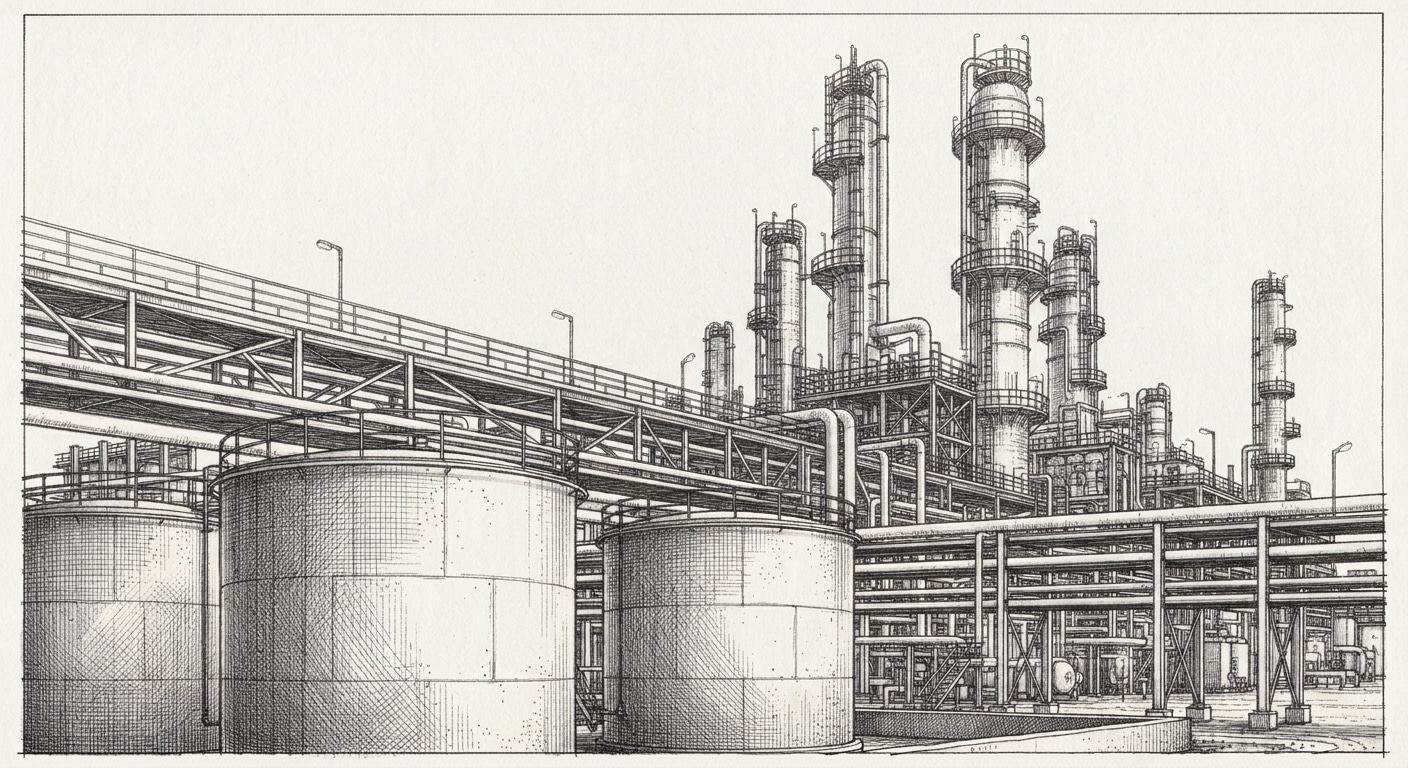
But first: what is hexane?
I am going to simplify things here to get straight to the point. If you would like to explore the subject in greater depth, I recommend Guillaume Coudray’s book De l’essence dans nos assiettes: Enquête sur un secret bien huilé, published by La Découverte (not translated yet) . I also recommend a 111-page Greenpeace France report, available online under the title Hexane rapport version web, which includes lists and brand names.
If you prefer videos (in French), the investigative programme Cash Investigation devoted an episode to ultra-processed foods, with hexane discussed at around the 1-hour-30-minute mark. You will see the shock on a farmer’s face when he discovers that he has been feeding his animals proteins he believed to be wholesome.
None of these reports or investigations mentions hexane in perfumery, as they focus on food. But they gave me the idea of writing this article to bring the subject to your attention.
To put it simply, hexane is a fraction obtained from the distillation of petroleum, a by-product generated in the production of fuels, among other things.
In the 1930s, it was being produced in huge quantities, with little use for it. Then people realised that it could improve the efficiency of oilseed extraction.
Hexane dissolves fats, much like white spirit. It is far more efficient than simple cold pressing because it extracts virtually all the oil from seeds, leaving behind the proteins used to feed animals. These protein-rich powders are known as “oilseed meals” or “press cakes”… and those animals, in turn, become our food.
Toxicologists at the time declared it safe. Industry invested in the necessary equipment, first in the United States and then, after the Second World War, in Europe.
It was only later, as cases emerged around the world, that people began to realise that workers handling products such as hexane-containing adhesives were developing blindness or severe, irreversible neuropathies.
Studies were published as early as the 1970s. But by then, it was too late: the machinery was in place, the industries were equipped and the profits were taken for granted. The issue was swept under the carpet.
Exposure to hexane is dangerous for people who handle this solvent, and the resulting health problems have been recognised as occupational diseases since 1973.
The World Health Organization (WHO) has identified its dangers, and France’s ANSES (the Agency for Food, Environmental and Occupational Health & Safety) has repeatedly highlighted its neurotoxic effects. Research into Parkinson’s disease suggests that hexane may be one contributing factor. Its reproductive toxicity has also been highlighted, and since 2014 ANSES has advised pregnant women to avoid inhaling it through exposure to paints, adhesives and aerosols.
Hexane is now firmly on the scientific and political agenda.
On 7 October 2025, around thirty scientists and professionals published an opinion piece in Le Monde, calling for a revision of the permitted limits, or even a ban on this solvent, in favour of alternatives that are already available.
Last March, in 2026, a first bill seeking to ban hexane was introduced.
Hexane in Perfumery
Did you know that some of the most iconic extracts in French perfumery, absolutes, are… the result of flowers being immersed in a bath of hexane?
Some flowers and other botanical materials do not tolerate distillation well, or simply yield too little essential oil.
Which materials am I talking about? Some of the most emblematic ingredients in perfumery: May rose, tuberose, jasmine grandiflorum and jasmine sambac, violet leaf, cassie, jonquil, narcissus, oakmoss… The list is a long one!
And here is something you may find even more astonishing: before hexane was used to produce absolutes, the industry used… benzene!
Of course, you are rarely told how these extracts are produced. And if the subject does come up, the process is referred to as “volatile solvent extraction”, accompanied by reassurances that no traces remain.
You are not told, either, that — just as in the food industry — residue levels are measured by the manufacturer or producer, who effectively determines whether the level is considered “problematic”.
And yet, you can smell it: when you open a bottle of absolute, there is often a fleeting whiff of hydrocarbons.
A producer once confided in me that, whatever you do, traces of hexane are always present.
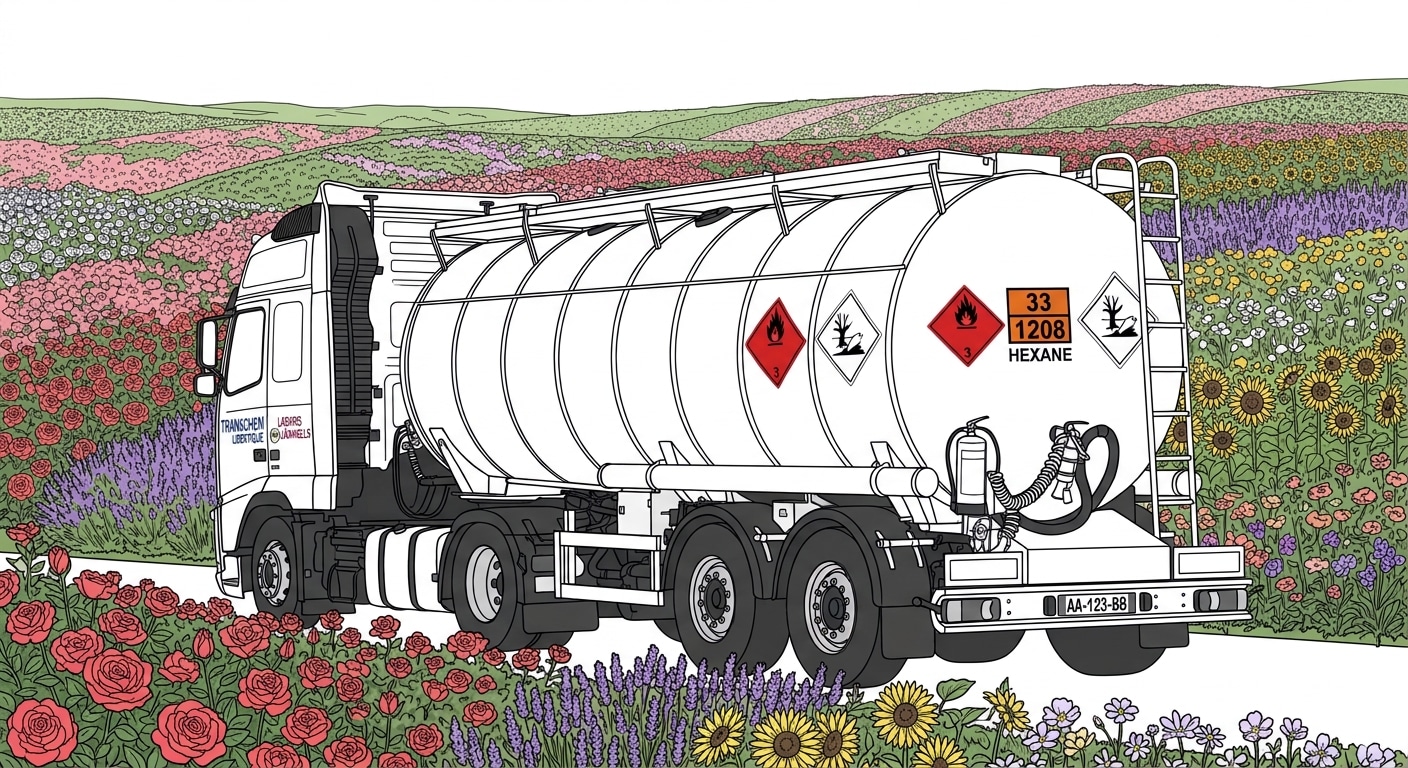
So, are there alternatives? Yes, but they are considerably more expensive.
• L’enfleurage : This traditional technique involves infusing delicate flowers into a vegetable fat at low temperatures to capture their fragrance. The fat is then washed with alcohol to recover the aromatic compounds.
The method was developed in Grasse in the nineteenth century, before gradually falling out of use in favour of solvent extraction.
If you have read Perfume: The Story of a Murderer by Patrick Süskind, you may remember the protagonist using enfleurage on young women…
Enfleurage is extremely expensive because it is such a long and laborious process. The flowers must be replaced several times on frames to saturate the fat. It requires extensive manual labour, on top of the work involved in growing and harvesting the flowers.
• CO₂ extracts : These extracts are produced under pressure, between 100 and 300 bar, at temperatures ranging from 30°C to 60°C.
The resulting extract is highly faithful to the original plant and can be compared with an absolute. However, the price is often two to three times higher, or even more.
No solvent is required, apart from the occasional addition of water or alcohol. No extraction solvent residues!
And why do some natural perfumers use absolutes?
First, we might ask ourselves whether absolutes can really be considered natural products.
Of course, flowers are cultivated with great care. They are even picked at dawn… You have all heard that story, and the work involved is truly remarkable.
But once they have been picked, those beautiful flowers are plunged into a bath of hexane.
Yes. All that effort, only to end up here.
The result is the famous “concrete”, which is then washed with alcohol. And there you have it: some of the most highly prized extracts are ready to find their way into the bottles of the world’s most famous perfumes…
But wait a minute… Doesn’t that give you pause for thought?
Many perfumes described as 100% natural are certified COSMOS NAT, but not COSMOS ORGANIC. So why are they not certified organic?
The reason is often the use of absolutes. Otherwise, why go to all the trouble of obtaining certification only to end up with a “COSMOS NAT” label, which also permits synthetic ingredients?
This is the choice made by some perfumers: 100% natural, but made using hexane.
Not very consistent, in our opinion. But it certainly makes their work easier — and costs considerably less.
Many extracts are simply not yet available as CO₂ extracts. There is still no CO₂ extract of jasmine sambac or oakmoss, for example, nor of lotus.
These perfumers may also rely on certificates stating that no traces of hexane are detectable. But you can test and certify all you like: once hexane has been introduced, it is not possible to remove it completely.
You have probably understood by now that at Isotta, hexane is out of the question.
Petrochemical solvents are also out of the question, even the newer alternatives.
Of course, producers know that hexane may eventually be banned, and they are working on replacement solvents. Unfortunately, for the time being, these alternatives are still derived from the petrochemical industry.
Just because a perfume organ looks old and distinguished does not mean it guarantees safe, healthy ingredients.